PP Plastic Deep-Groove Ball Bearings
Polypropylene plastic ball bearings for wet, corrosive, food-processing and electrically insulated light-duty rotating applications where rust prevention, clean operation and chemical resistance matter more than heavy-load metal bearing capacity.
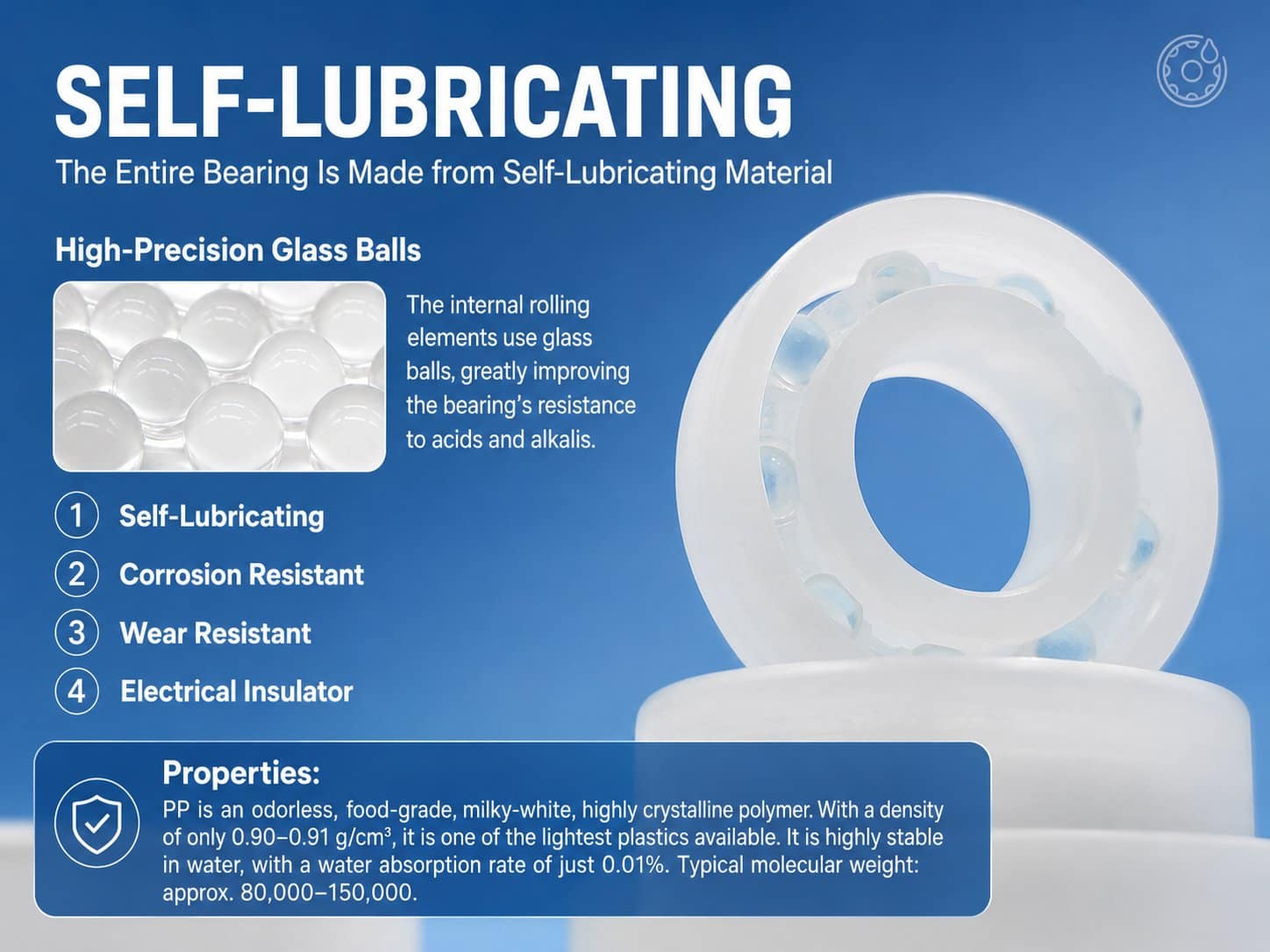
Self-lubricating PP rings, precision glass balls and integrated PP retainer for stable light-duty rotation.
Compact Technical Summary
A fast engineering view for RFQ screening before selecting exact bearing model, ball material, seal configuration and order quantity.
Polypropylene Bearing Material for Corrosive Environments
The bearing is manufactured using high-quality polypropylene (PP) with a density of 0.90–0.91 g/cm³, offering lightweight and excellent chemical resistance performance.
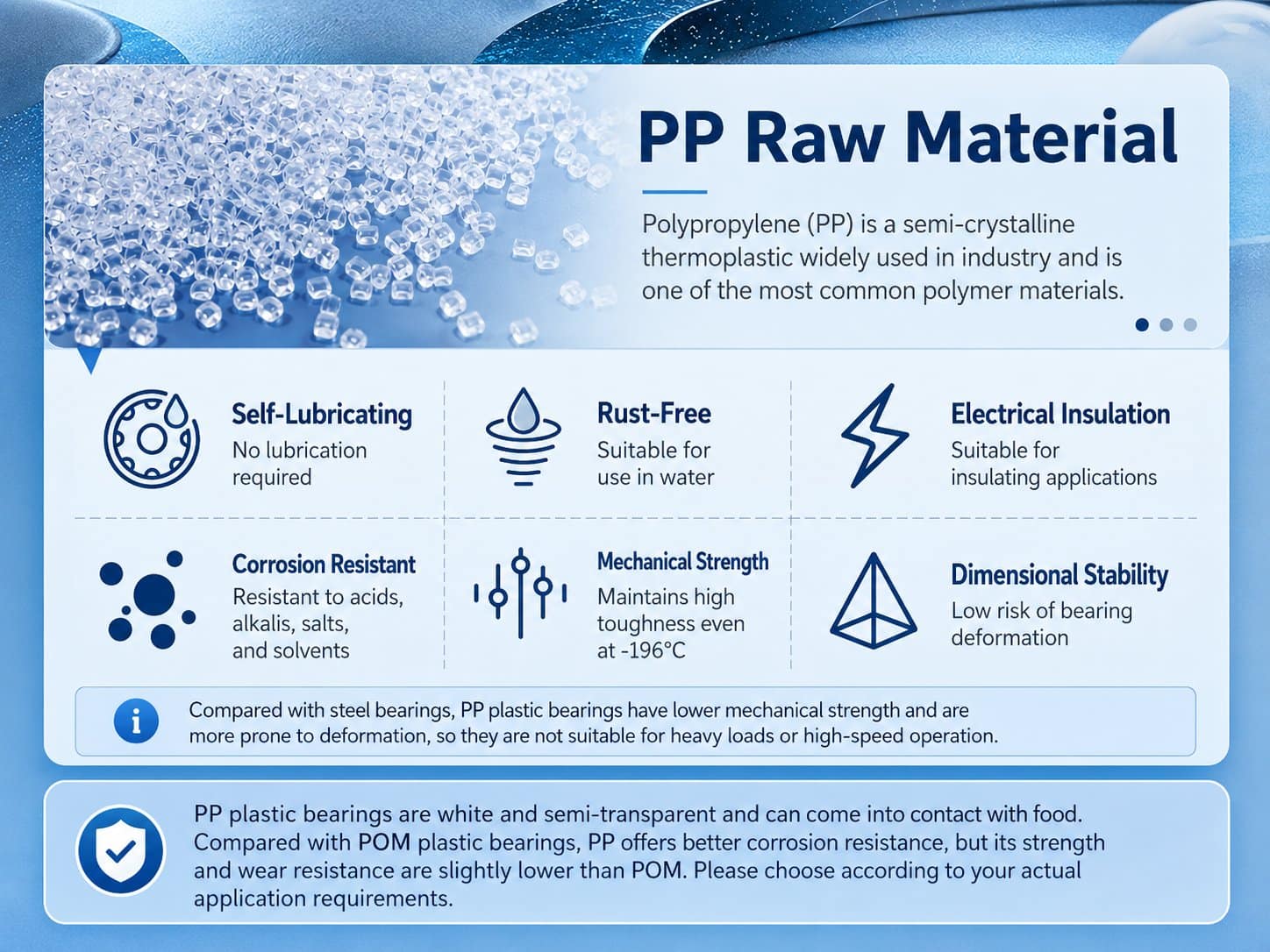
- Ultra-Low Water Absorption: ~0.01% for stable dimensional performance in humid or submerged conditions.
- Chemical Resistance: Strong resistance to most acids, alkalis, saline solutions, oils, and industrial cleaning agents.
- Electrical & Magnetic: Excellent electrical insulation and non-magnetic properties.
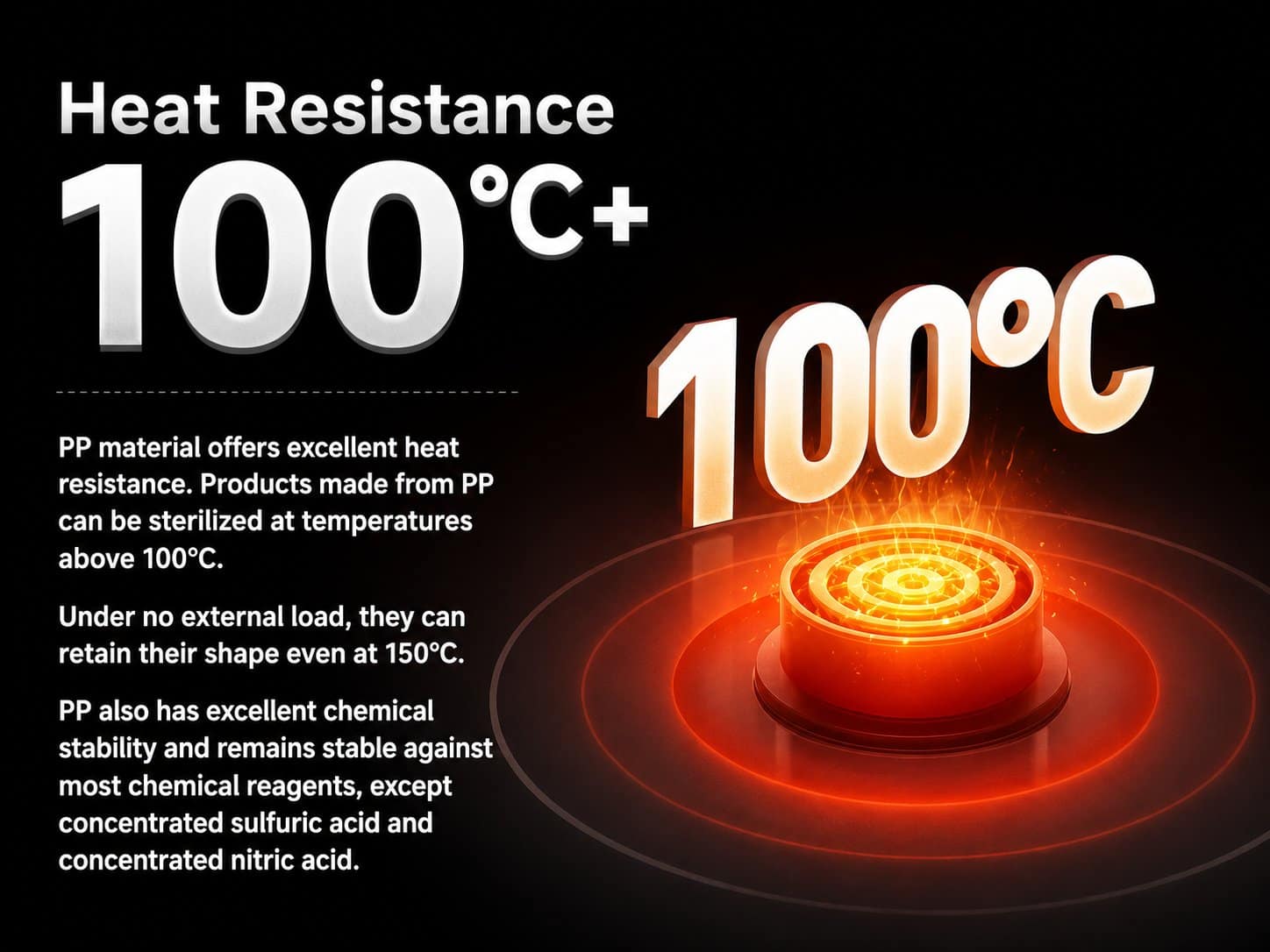
- Temperature Range: Stable performance down to approximately -20°C and up to +90°C continuous operation.
vs POM bearings
PP provides significantly better chemical resistance and insulation performance, especially in corrosive and wet working environments.
Best-fit use
Wet, corrosive, electrically sensitive and clean operating environments where PP material properties are the priority.
Performance Advantages for Industrial Buyers
Long paragraphs are simplified here for fast engineering review; the original technical points are preserved below in concise cards.
Chemical & Corrosion Resistance
Stable in acidic, alkaline, seawater and industrial cleaning media under suitable light-load conditions.
Self-Lubricating Design
Modified PP components reduce the need for grease or oil and help keep operation clean.
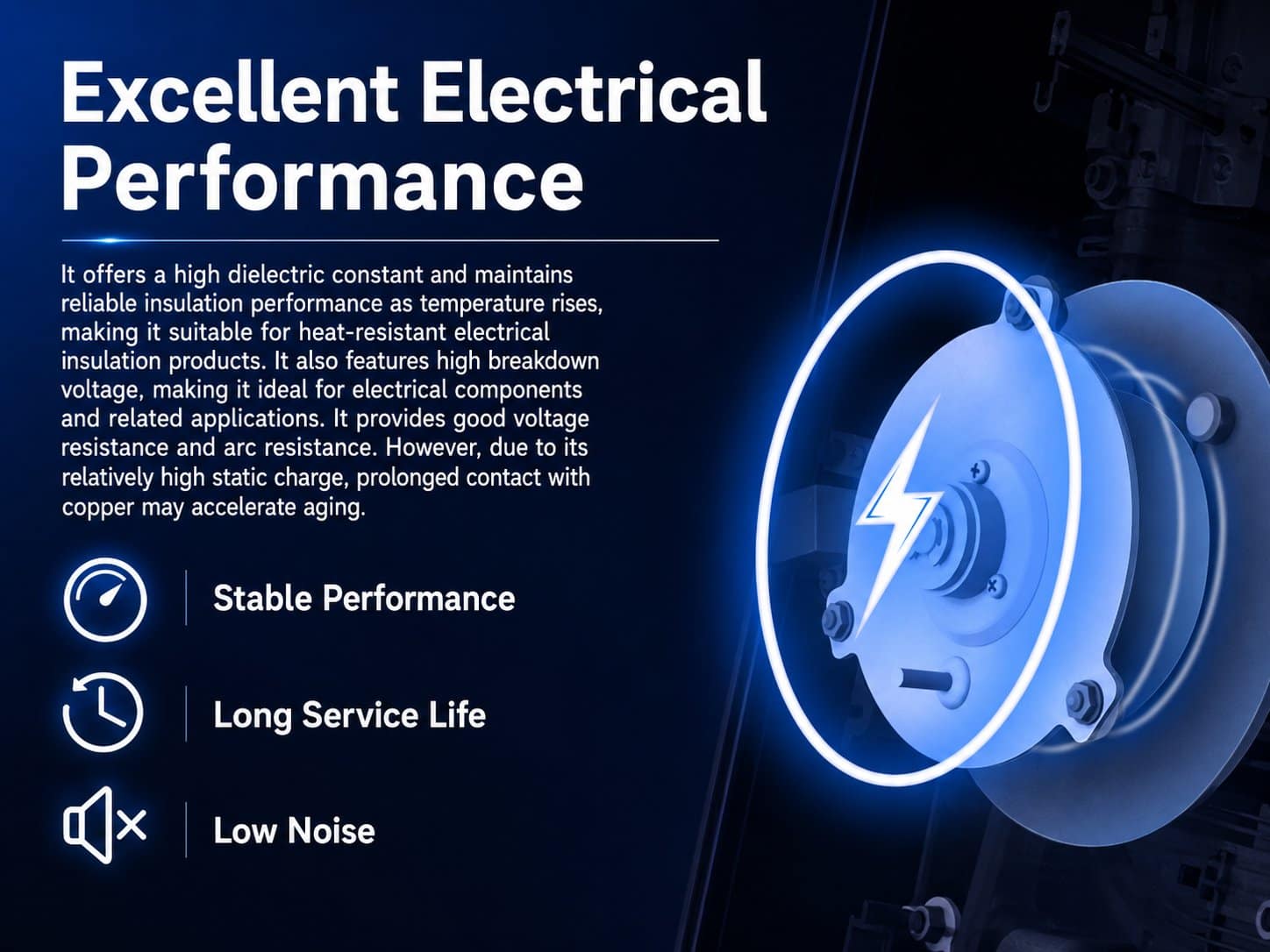
Electrical Insulation
Fully non-conductive and non-magnetic for electrical equipment and testing instruments.
Smooth Low-Noise Operation
Integrated injection-molded cage structure helps reduce vibration during light-duty rotation.
Ultra-Low Water Absorption
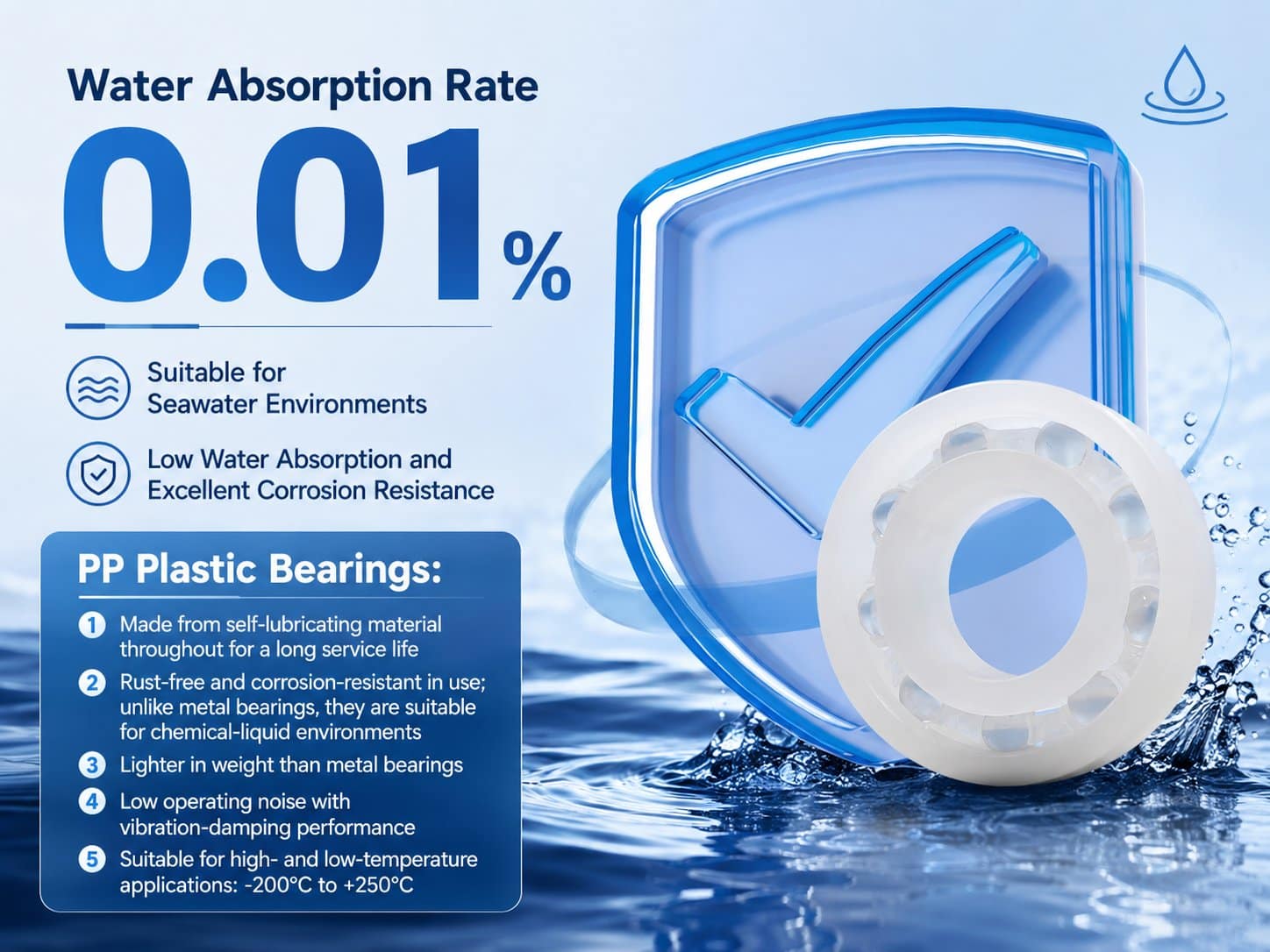
Approximately 0.01% water absorption supports dimensional stability in humid or submerged applications.
Clean Operation
No lubricant contamination risk for food, chemical and clean rotating systems.
Industrial Applications for International Buyers
Six common RFQ scenarios for PP plastic bearings. Images reuse existing product visuals and should be read as application-fit illustrations, not factory scene photos.
Industrial machinery
Light industrial rotating systems, small rollers and guide mechanisms.
Food machinery
Food processing wet transmission parts requiring clean, lubricant-free operation.
Chemical equipment
Chemical fluid handling systems exposed to acids, alkalis or cleaning media.
Medical equipment
Laboratory and testing instruments requiring low noise and electrical insulation.
Semiconductor equipment
Electrical insulation components and rotating assemblies sensitive to conductivity.
High-temperature systems
Moderate-temperature light-duty systems up to +90°C continuous operation.
Additional applications from the original product information
Technical Advantages vs Metal and Standard Plastic Bearings
- vs metal bearings: Eliminates rust and corrosion issues common in metal bearings when used in wet or chemical environments.
- vs standard plastic bearings: PP excels in chemical resistance, electrical insulation and low water absorption.
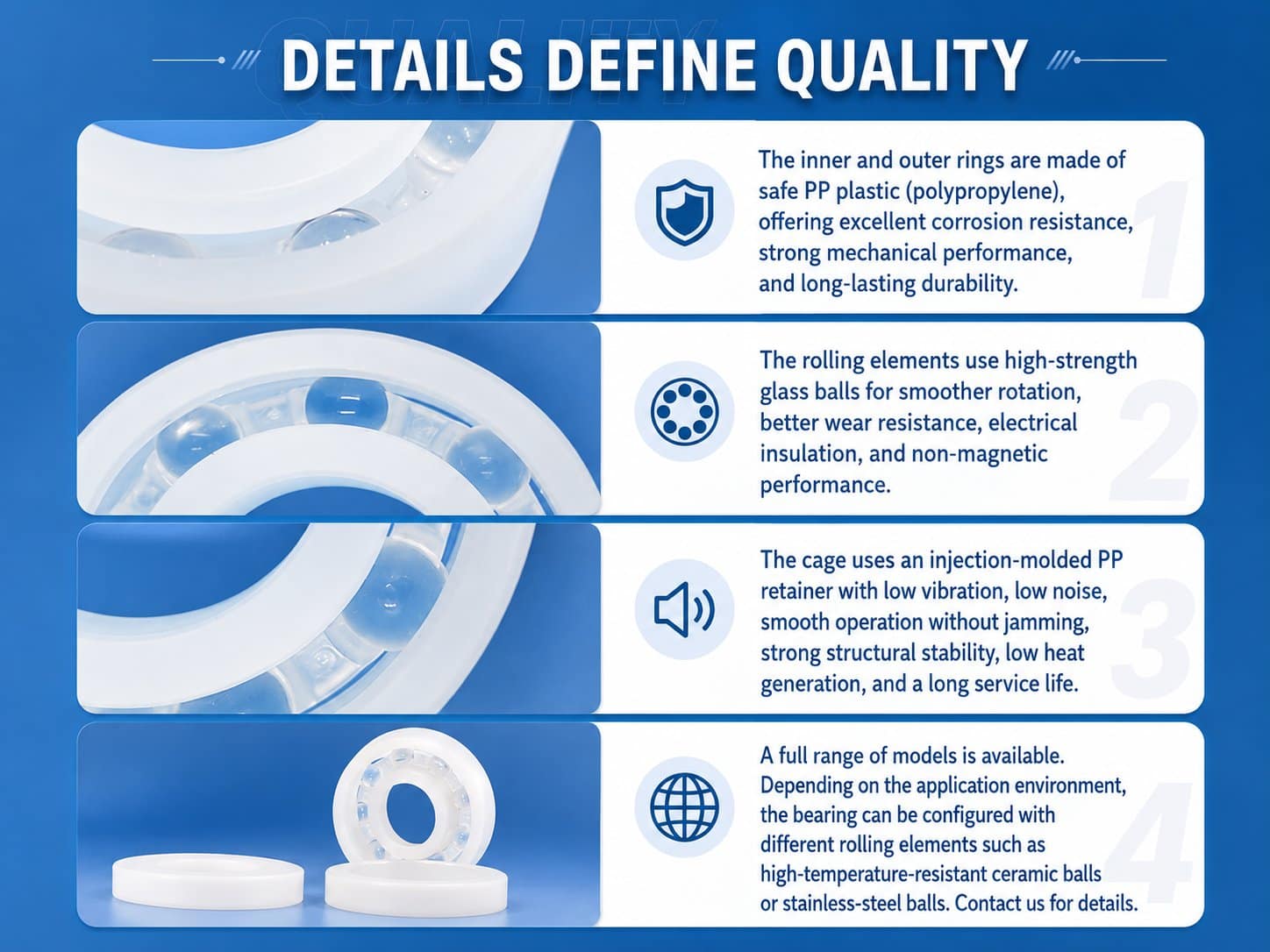
- Rotation performance: High-precision glass balls and integrated PP retainer support stable rotation and reduced friction.
- Clean use: No external grease or oil lubrication is required in many suitable light-duty applications.
✔ Good fit
Wet, corrosive, food-processing, seawater, laboratory and electrically insulated systems.
✖ Not designed for
Heavy load conditions, high-speed continuous rotation or strong mechanical impact environments.
Simplified PP Bearing Structure
Advantages and Application Limits
✔ Advantages
Prevents rust and seizure in wet or chemical environments, eliminates lubricant contamination in food production lines, avoids electrical short circuits and magnetic interference, reduces maintenance frequency and downtime, improves stability in humid and corrosive conditions, and provides quieter operation.
✖ Limitations
PP bearings are engineered for light to medium load applications only. They are not suitable for heavy load conditions, high-speed continuous rotation, or strong mechanical impact environments. Proper selection based on load and speed is required before use.
Ultra-low water absorption supports stable dimensional performance in humid, submerged and seawater-related environments.
PP material supports stable operating performance from approximately -20°C to +90°C, with short-term peak use up to 100°C.

High-precision glass balls support smooth, corrosion-resistant rotation in PP plastic bearing assemblies.
PP Plastic Deep-Groove Ball Bearings Size Selection Table
Select a bearing type, series and model to confirm the inner diameter, outer diameter and width. To keep this section compact, detailed size rows are not expanded by default. Choose a category, series, model, or use quick search to display matching specifications.
Select a PP plastic bearing category
Detailed model dimensions will appear after you select a type, series, model, or enter a search keyword.
Dimension unit: mm. Width values such as 2/3 or 3/4 indicate optional width versions. Please confirm required width, ball material, seal type and quantity when sending your RFQ.
| Type | Series | Model | Inner Dia. | Outer Dia. | Width | RFQ |
|---|
Global RFQ Support for Industrial Precision Components
At DISLAB Precision, we are a trusted global supplier of industrial precision components, including fasteners, spacers, standoffs, and custom-engineered parts. With a manufacturing network of 300+ qualified partners, we ensure stable production capacity and consistent quality across both small-batch prototypes and large-scale orders.
Every product undergoes strict quality inspection, including material verification, dimensional accuracy checks, and surface quality control before shipment. Our engineering and sourcing team of 40+ professionals provides technical support, sourcing optimization, and customized manufacturing solutions, including OEM/ODM services and tailored packaging.
Whether you are sourcing standard components or developing custom industrial parts — from heavy-duty hose clamps to blind rivet nuts and T-bolt hose clamps — we provide reliable support from inquiry to delivery.
High quality manufacturing | Global shipping | Custom engineering support
